
Moving during Toronto winter transforms standard relocation logistics into complex operations requiring specialized planning, safety protocols, and weather-contingent strategies that summer moves avoid entirely. Snow accumulation, icy walkways, sub-zero temperatures, reduced daylight hours, and unpredictable storm systems create hazards and delays that homeowners and renters must anticipate when coordinating December, January, or February relocations. Whether employment transitions, lease expirations, or real estate closing dates force winter move timing, or whether strategic buyers and renters choose winter specifically for reduced competition and potential cost savings, moving during Toronto winter demands preparation beyond standard packing and truck loading. Understanding how cold weather affects loading operations, what floor protection prevents salt and slush damage, which packing materials protect temperature-sensitive belongings, and how professional winter movers mitigate seasonal risks determines whether your winter relocation succeeds smoothly or deteriorates into a frozen, frustrating ordeal.
This comprehensive guide covers every dimension of moving during Toronto winter including safety protocols for icy conditions, floor and property protection strategies, cold-weather packing requirements, timing optimization around weather forecasts, what to expect from professional winter movers, and practical tips that prevent the most common winter moving disasters. For complete cost analysis including whether winter moves offer financial advantages through off-season pricing, the Etobicoke cost of living 2026 guide provides broader financial planning context. For families and professionals coordinating winter relocations across Etobicoke and Toronto, Metropolitan Movers Etobicoke delivers year-round moving services with specialized winter experience protecting clients and properties during challenging seasonal conditions.
Why Moving During Toronto Winter Requires Different Planning Than Summer Relocations
Moving during Toronto winter requires fundamentally different planning than warm-weather relocations because cold temperatures, precipitation, and reduced daylight create operational challenges affecting every phase from packing through unpacking. Snow accumulation transforms simple driveway access into complex staging problems requiring shoveling, salting, and truck positioning that summer moves never consider. Ice buildup on walkways and stairs creates slip hazards for moving crews carrying heavy furniture and boxes, slowing operations while increasing injury risk that affects both timelines and liability.
Temperature extremes during winter moving affect belongings directly, with electronics, musical instruments, artwork, and houseplants requiring protection from cold exposure that could cause damage during the hours they spend in unheated truck cargo areas. Furniture surfaces contract in cold temperatures, making pieces more brittle and susceptible to cracking or scratching during the handling required for loading and unloading operations.
Reduced daylight hours compress available moving windows particularly for households that cannot begin loading operations until after work hours. A summer move starting at five PM proceeds comfortably until nine or ten PM with natural light, while winter darkness at five-thirty PM forces reliance on artificial lighting that complicates outdoor loading and creates additional safety concerns.
Weather unpredictability represents the fundamental challenge distinguishing moving during Toronto winter from summer relocations. A forecast calling for light snow can deteriorate into heavy snowfall or freezing rain that makes moving operations dangerous or impossible, forcing last-minute rescheduling that creates cascading complications with lease dates, closing timelines, and utility coordination.
Metropolitan Movers Etobicoke has coordinated thousands of winter relocations across Toronto and Etobicoke over decades of year-round operations, developing specialized protocols and equipment that address seasonal challenges systematically rather than improvising solutions as problems emerge.
Winter Relocation Safety: Protecting People and Property During Cold-Weather Moves
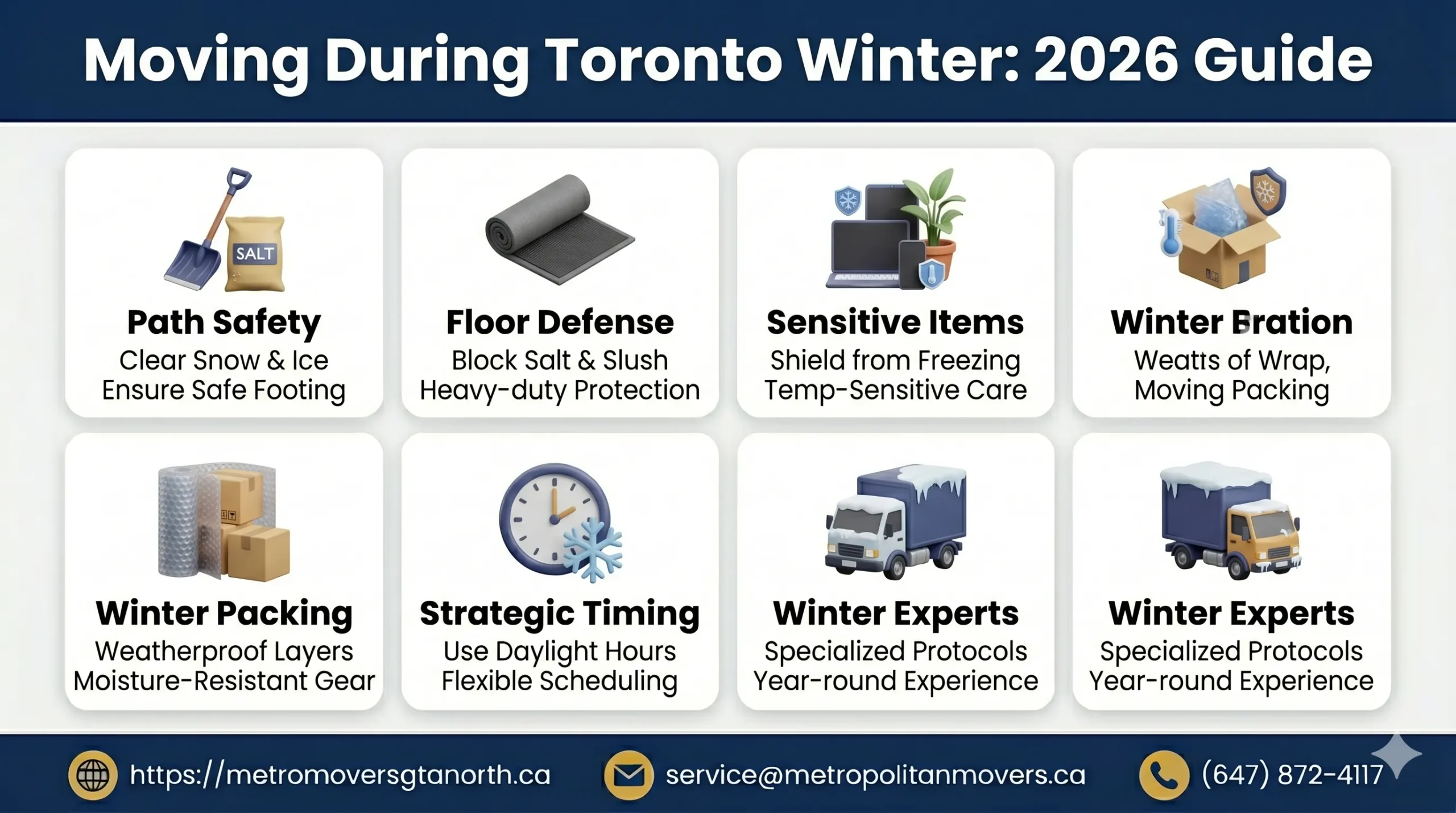
Winter relocation safety protocols begin with walkway and driveway clearing creating safe paths between moving truck and property entrances before loading operations commence. Snow shoveling alone proves insufficient because packed snow turns to ice under foot traffic, requiring aggressive salting, sanding, or application of ice-melting compounds that maintain safe footing throughout multi-hour loading and unloading periods.
Stair safety demands particular attention during winter moves as snow-covered or ice-glazed steps create extreme slip hazards when combined with the weight and awkward dimensions of furniture, appliances, and loaded boxes. Professional winter movers apply traction treatments, use handrails religiously, and take extra time navigating stairs rather than rushing movements that risk falls causing injury and property damage simultaneously.
Cold exposure affects human performance materially during moving during Toronto winter, with freezing temperatures reducing dexterity, increasing fatigue, and impairing judgment as hours progress. Moving crews and DIY movers alike must dress in layers, take warming breaks indoors, stay hydrated despite not feeling thirsty in cold weather, and recognize early signs of hypothermia or frostbite that demand immediate attention before conditions worsen.
Truck ramp safety requires non-slip surfaces, proper angle maintenance even when snow accumulates on the ramp surface, and cautious footing as crews transition between frozen outdoor surfaces and relatively warmer truck interiors where temperature differentials can create condensation making surfaces slippery. Proper footwear with deep tread and potentially cleats or traction devices becomes essential equipment rather than optional enhancement during winter moving operations.
The residential moving services in Etobicoke from Metropolitan Movers Etobicoke include comprehensive winter safety protocols protecting crews and clients throughout seasonal relocations.
Moving in Snow: Operational Strategies for Active Precipitation
Moving in snow actively falling during relocation operations requires real-time decision-making balancing completion urgency against safety deterioration as accumulation worsens. Light snow flurries create manageable inconvenience requiring periodic walkway clearing and extra caution without necessarily halting operations. Moderate to heavy snowfall accumulating faster than crews can clear pathways forces difficult decisions about whether continuing moves forward safely or whether rescheduling protects people and property better despite schedule disruption.
Snow protection for belongings demands covering furniture and boxes during the transition from property to truck using tarps, blankets, or plastic sheeting that prevents moisture penetration while items spend minutes exposed to falling snow. Professional movers employ specialized covers and rapid loading techniques minimizing exposure duration, while DIY movers should pre-position protective materials and plan efficient relay systems reducing the time any single item spends in active precipitation.
Truck positioning becomes critical during moving in snow because optimal parking for loading efficiency may not coincide with locations maintainable during snowfall. Parking trucks on flat surfaces rather than inclines prevents sliding hazards, positioning near building entrances minimizes exposure distance, and avoiding street parking where snowplows operate prevents trucks getting blocked or damaged by passing plow equipment.
Snow removal responsibilities typically fall to property owners or tenants, but during active relocations, determining who maintains clear paths and who bears liability for injuries occurring on snow-covered property creates disputes that clear advance agreements prevent. Renters should confirm with landlords who handles snow removal on moving day, while home buyers and sellers should clarify responsibilities in purchase agreements to avoid conflicts during transition periods.
Protecting Floors During Winter Moves: Salt, Slush, and Moisture Management
Protecting floors during winter moves from salt, slush, melting snow, and tracked-in debris requires proactive covering systems preventing damage that security deposits won’t cover or that devalues properties sellers must present in show-ready condition. The corrosive properties of road salt combined with abrasive sand and grit tracked from outdoor surfaces scratch hardwood, stain carpets, and damage tile grout when moving operations involve hundreds of trips between exterior and interior spaces.
Floor protection materials for moving during Toronto winter include heavy-duty runners, adhesive protective films, and thick cardboard overlays that cover high-traffic pathways from entry points to moving staging areas. These materials must stay secured despite wet conditions that cause adhesives to fail and that create slipping hazards when protection materials shift under foot traffic.
Entry mat systems at every door create staging areas where crews and helpers pause to wipe feet before proceeding deeper into properties, capturing the majority of moisture, salt, and debris before it spreads throughout living spaces. Multiple mat rotations throughout the day become necessary as mats saturate with moisture and debris reducing their effectiveness at preventing tracked-in contamination.
Moisture barriers protect not just floors but also possessions staged on floors during packing and loading operations. Cardboard boxes sitting directly on wet floors wick moisture upward compromising box integrity and potentially damaging contents, requiring pallets, plastic sheeting, or other barriers preventing direct floor contact throughout the moving process.
Post-move cleanup demands immediate attention because salt residue left on floors continues causing damage through moisture absorption and surface interaction even after moving crews depart. Thorough mopping with appropriate cleaning solutions neutralizes salt, removes grit, and protects floor surfaces from ongoing degradation that delayed cleaning allows.
The Etobicoke cost of living 2026 guide covers property maintenance costs including floor repair and replacement expenses that inadequate moving protection can necessitate.
Cold-Weather Packing: Protecting Temperature-Sensitive Belongings
Cold-weather packing for moving during Toronto winter requires identifying and specially protecting items vulnerable to freezing temperatures, thermal shock, or condensation damage during transport in unheated truck cargo areas. Electronics including televisions, computers, and audio equipment should be packed in original boxes when available or wrapped in blankets and placed in the heated cab rather than unheated cargo area when temperatures drop below freezing for extended periods.
Houseplants require particular protection during winter moving because cold exposure even for short durations can cause irreversible damage to tropical varieties and cold-sensitive species. Plants should move in heated vehicles separate from the main moving truck, be wrapped in paper or fabric providing insulation, and never be left in unheated vehicles overnight during multi-day relocations.
Liquids including cleaning supplies, cooking oils, beverages, and personal care products risk freezing and container rupture when exposed to sub-zero temperatures during moving during Toronto winter. These items need insulated packing, rapid transport minimizing cold exposure, and careful inspection after moves for containers that may have cracked during freezing even if not immediately visible.
Artwork and musical instruments demand climate-controlled transport when moving during Toronto winter because temperature and humidity fluctuations cause expansion, contraction, and moisture damage affecting canvases, wooden instrument bodies, and delicate mechanisms. Professional art handlers and instrument movers provide specialized transport maintaining stable conditions, while DIY movers should transport these items personally in heated vehicles rather than risking exposure in moving trucks.
Furniture with veneer surfaces, leather upholstery, or delicate finishes benefits from blanket wrapping providing both physical protection and thermal insulation moderating temperature exposure during cold-weather transport. The combination of protection reduces scratching risk while preventing thermal shock that can crack finishes or separate veneer from underlying wood.
Hiring Winter Movers: What Professional Services Deliver in Cold Weather
Hiring winter movers provides specialized expertise, appropriate equipment, and liability protection that DIY winter relocations struggle to match safely and efficiently. Professional moving companies operating year-round develop winter protocols, invest in equipment suited to cold-weather operations, and train crews on safety procedures that prevent the accidents and property damage that amateur winter movers risk through inexperience.
Professional winter movers carry insurance covering slip-and-fall injuries, cold-related health incidents, and property damage occurring during winter moves, protecting homeowners and renters from liability that DIY moves leave uninsured. This liability protection alone justifies professional service costs for many clients unwilling to accept the financial risk that frozen walkways and icy conditions create.
Equipment advantages professional movers bring to winter relocations include commercial-grade floor protection systems, weatherproof furniture covers, climate-controlled trucks maintaining above-freezing cargo temperatures, and traction devices for footwear and truck ramps that DIY movers rarely possess. The specialized gear enables safe operations during conditions that would force amateur movers to delay or abandon efforts.
Scheduling flexibility represents another professional advantage because established moving companies maintain crew availability and backup options when weather disrupts planned moving dates. Individual truck rental companies and DIY movers face complete restart of rental processes when weather forces postponement, while professional movers coordinate rescheduling internally without requiring clients to navigate multiple vendor relationships.
Metropolitan Movers Etobicoke provides comprehensive winter moving services across Toronto and Etobicoke backed by decades of cold-weather operational experience. The house moving service and local moving service both include winter-specific protocols protecting clients and properties.
Winter Moving Checklist: Critical Preparations for Cold-Weather Relocations
A comprehensive winter moving checklist begins weeks before moving day ensuring weather monitoring, supply procurement, and contingency planning occur with adequate lead time rather than rushed last-minute improvisation. Key checklist categories include weather tracking, walkway preparation, property protection, cold-weather packing, emergency supplies, and contingency planning for weather-forced delays.
Weather monitoring should commence one week before scheduled moving dates using reliable forecasting services that provide hour-by-hour precipitation and temperature predictions. Plans requiring outdoor loading during forecasted heavy snow, freezing rain, or extreme cold should trigger proactive rescheduling discussions rather than waiting until moving day to confront impossible conditions.
Walkway and driveway preparation checklist items include confirming snow clearing responsibility, procuring adequate salt and sand supplies, arranging backup snow removal services if primary plans fail, and testing all walkway lighting ensuring safe operations continue after dark when winter daylight ends early.
Property protection supplies requiring advance procurement include floor runners, adhesive protective film, entry mats, weatherproof furniture covers, moisture barriers, and cleaning supplies for post-move salt and slush remediation. Waiting until moving day to purchase these materials risks stores selling out during winter storms when demand spikes.
Cold-weather packing supplies distinct from summer moving materials include insulated blankets, heating pads for temperature-sensitive electronics, plant protection wrapping, and weatherproof boxes or bags for items that may encounter moisture during outdoor transitions between properties and trucks.
Emergency supplies for moving during Toronto winter include space heaters for warming crew members during breaks, first aid kits stocked for cold-weather injuries, backup flashlights and batteries for lighting failures, and charged cell phones with backup power banks enabling communication if conditions deteriorate unexpectedly.
The packing service from Metropolitan Movers Etobicoke includes winter-specific packing materials and techniques protecting belongings throughout cold-weather relocations.
Timing Strategies: Choosing the Best Winter Moving Window
Timing strategies for moving during Toronto winter involve balancing date flexibility against weather forecast accuracy and seasonal pattern recognition that identifies periods presenting lower risk than others. Mid-winter months of January and February typically deliver the coldest temperatures and highest snowfall accumulation, while December and March bookend winter with milder conditions and reduced precipitation frequency on average.
Weekday moves during winter often proceed more smoothly than weekend relocations because municipal snow clearing prioritizes business districts and major roads during weekday mornings, commercial parking areas remain accessible, and building management staff are available to coordinate elevator bookings and loading dock access that weekend operations struggle to arrange.
Mid-month moving dates avoid the concentration of lease turnovers and real estate closings occurring at month-end when moving demand peaks even during winter. This reduced competition improves availability for professional movers, truck rentals, and storage facilities while potentially generating cost savings through off-peak pricing that month-end dates never offer.
Weather window monitoring within the forty-eight to seventy-two hour period before planned moves allows final go/no-go decisions based on reliable forecasts while maintaining enough scheduling flexibility that rescheduling remains feasible without catastrophic cost or logistical penalties. This window balances forecast accuracy against the advanced planning most relocations require.
The Etobicoke cost of living 2026 guide discusses whether winter relocations offer cost advantages that offset seasonal inconveniences for budget-focused households.
Moving During Toronto Winter: Professional Services Make the Difference
Moving during Toronto winter challenges even experienced relocators with hazards, delays, and property damage risks that professional moving services systematically mitigate through specialized training, appropriate equipment, and liability protection. Metropolitan Movers Etobicoke delivers year-round moving services with particular expertise managing cold-weather operations across Etobicoke and Toronto.
The storage moving service provides climate-controlled storage protecting belongings from freeze damage during gaps between move-out and move-in dates. The senior moving service offers patient, careful handling essential when older adults relocate during challenging winter conditions.
For specialty items requiring extra protection, piano moving service and furniture removals provide expert handling. The last-minute moving company coordinates urgent winter relocations when weather or other circumstances create compressed timelines.
Complete winter moving guidance and service details are available through the full services page or by contacting the team directly. For broader relocation planning including cost analysis, the moving to Etobicoke guide and Etobicoke cost of living 2026 guide provide comprehensive frameworks supporting successful relocations.