
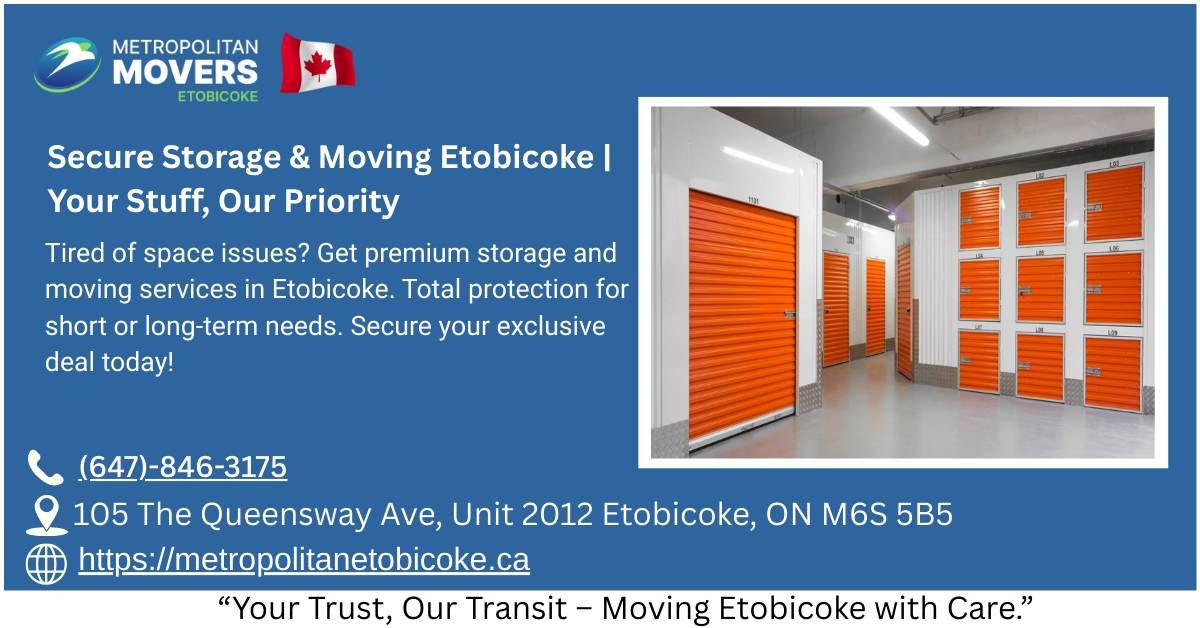
Your moving timeline has a gap. The new condo in Humber Bay isn’t ready for two months. Your renovation in The Kingsway is starting next week. You’re downsizing in Islington, but the family heirlooms have no home yet. This logistical gap—the space between where your belongings are and where they need to be—is where panic sets in. Renting a storage unit seems simple, but then come the questions: “How long will I need it? What size? How do I get my stuff there safely? And what happens to my furniture in a metal box through an Etobicoke winter?” This guide demystifies the integrated world of professional **storage and moving services**. We’ll break down the critical differences between short-term and long-term solutions, explain the local considerations for Etobicoke residents, and provide the decision-making framework to ensure your possessions are not just stored, but preserved.
Understanding Storage and Moving Services
First, let’s define the service model. This isn’t just about renting a locker; it’s about a seamless logistics chain that handles your belongings from point A, to storage, to point B.
What Are Storage and Moving Services
**Storage and moving services** (often called **moving and storage services**) are integrated relocation solutions that combine professional transportation with secure, managed storage. A single provider handles the packing, loading, transportation, placement into a storage facility, and eventual retrieval and delivery to your final destination. This integrated model eliminates the need for you to rent a truck, move items twice, or coordinate between separate moving and storage companies. It’s a managed, start-to-finish solution for complex transitions.
Difference Between Standalone Storage and Integrated Moving & Storage Services
The difference is responsibility and convenience. Standalone Storage: You rent a unit from a facility (e.g., a public storage company). You are responsible for transporting items to/from the unit, packing them appropriately for storage, and providing your own lock. Integrated Moving & Storage Services: The moving company provides the storage as part of a bundled service. They pick up your items, transport them to their secured warehouse, store them under their insurance and care, and deliver them when you’re ready. They handle the entire chain of custody. This is the core of a true storage moving service.
How Moving and Storage Services Work Together
The integration is operational. The same crew that packs your home loads the truck destined for the warehouse. They use an inventory system that tracks each item from your home to a specific warehouse location (aisle, rack, bin). When it’s time for delivery, the same system pulls the inventory, and a crew retrieves and delivers it. This continuity reduces handling, loss, and damage.
Types of Storage Options Available
The duration of your need dictates the type of storage service and contract you require. Choosing correctly affects cost, flexibility, and the level of care your items need.
Short-Term Storage Solutions
Short-term storage is defined as a temporary holding solution, typically ranging from two weeks to three months. It’s designed for flexibility and accessibility, acting as a logistical buffer.
Typical Use Cases: Bridging a gap between moving out and moving in; during home renovations or staging for sale; storing seasonal items (patio furniture, winter tires) near the time of need; or as temporary holding during a business relocation.
Duration & Flexibility: Contracts are usually month-to-month with no long-term commitment. Pricing is higher per month than long-term rates but offers total flexibility. You can vacate with 30 days’ notice (sometimes less).
Accessibility: For integrated services, access may require scheduling a retrieval with the company, as your items are often stored in a larger, managed warehouse. For standalone units, you typically have 24/7 access with your own key.
Long-Term Storage Solutions
Long-term storage is for items that will be in storage for three months to several years. This requires a different approach focused on preservation, cost efficiency, and stable conditions.
Common Reasons: Downsizing where future housing is uncertain; storing estate items; holding business archives or seasonal equipment; storing furniture for children who are at university or living abroad.
Contract & Cost Structure: Facilities often offer discounts for longer commitments (e.g., 10-20% off for 6-month or 12-month prepaid contracts). The monthly rate is lower, but you’re locked in for the term, with potential penalties for early termination.
Item Preservation Considerations: Long-term storage demands proactive protection. Items must be packed specifically for prolonged static storage (see Packing Protocols section). Climate control is often non-negotiable for anything beyond basic, rugged items.
Short-Term vs Long-Term Storage: Key Differences
Choosing between short-term and long-term isn’t just about time; it’s about matching the service model to your specific needs for cost, access, and protection.
Cost Comparison Between Short-Term and Long-Term Storage
Short-term storage has a higher monthly rate but lower total cost for brief periods. You pay for flexibility. Long-term storage has a lower monthly rate but a higher total cost over time; you pay for stability and discounted pricing. Always calculate the total projected cost: (Monthly Rate x Estimated Months) + any administrative/move-in fees.
Pricing Models Used by Moving & Storage Services
Integrated services typically charge a combination of: a one-time moving/handling fee (for pickup and delivery), a monthly storage rate based on the volume (cubic feet) or number of containers used, and sometimes a retrieval/delivery fee when you need items back. Get all fees in writing upfront.
Hidden Costs to Watch For
These include: fees for mandatory insurance above a basic level; charges for administrative tasks or inventory management; late payment penalties; fees for early contract cancellation on long-term leases; and potential “peak season” surcharges for storage during summer months in Etobicoke.
Security and Safety Differences
All reputable facilities have security, but the standards can differ based on the clientele and value of stored goods.
Security Measures in Short-Term Storage
Facilities catering to short-term clients (like those near condos in Mimico) often have robust 24/7 digital surveillance, coded gate access, and well-lit premises. Since turnover is higher, the focus is on preventing unauthorized entry from outside.
Security Measures in Long-Term Storage
Facilities designed for long-term, high-value storage (often used by integrated moving companies) add layers like individually alarmed units, periodic staff patrols, advanced fire suppression systems (not just sprinklers), and detailed access logs for any employee entering the unit. The focus is on prolonged, verifiable security.
Climate Control and Environmental Protection
This is the most critical differentiator for preserving your belongings in Etobicoke’s humid summers and cold winters.
When Climate-Controlled Storage Is Necessary
Climate control maintains a steady temperature (usually 55-75°F) and humidity level (ideally 50-55%). It is necessary for: solid wood furniture, antiques, musical instruments, electronics, artwork, photographs, important documents, leather goods, wine, and any fabric prone to mold. For any storage beyond 30 days, climate control is a wise investment.
Risks of Improper Storage Conditions
In a standard unit, summer humidity causes wood to swell and warp, promotes mold and mildew on fabrics, and rusts metal. Winter cold can make wood and leather brittle. Temperature swings cause materials to expand and contract, leading to cracked veneers, separated joints, and damaged electronics. The cost of climate control is always less than the cost of replacing a warped antique table or a moldy sofa.
Climate and Seasonal Planning for Etobicoke Storage
Etobicoke’s proximity to Lake Ontario means higher humidity. Plan your storage timing if possible. Moving humidity-sensitive items into storage in the peak of summer is riskier. If you must store in July/August, ensure items are absolutely dry before packing and use vapor-barrier wraps. For winter, ensure items are not stored directly on concrete floors, which can transfer cold and moisture; pallets or shelving are essential.
Storage and Moving Services in Etobicoke: Local Considerations
Your location within the GTA influences storage logistics, demand, and the specific services you should look for.
Storage Demand in Etobicoke
Etobicoke’s mix of dense urban areas (Humber Bay Shores condos) and established residential neighborhoods (Kingsway, Markland Wood) creates diverse storage needs. Condo dwellers often need short-term storage during moves or for seasonal gear due to lack of locker space. Homeowners undergoing renovations or downsizing from larger properties drive demand for larger, longer-term units. This demand means reputable facilities book up in peak moving season (May-Sept), so plan ahead.
Residential vs Commercial Storage Needs
Residential: Focuses on furniture, household goods, and personal items. Needs flexibility and often climate control. Commercial: For businesses in Etobicoke’s industrial areas (e.g., near the 427), storage needs include office furniture, inventory, archives, and equipment. Commercial contracts often involve higher volume, more frequent access, and specific liability/insurance requirements.
Local Regulations and Compliance
Storage facilities in Etobicoke must comply with Toronto zoning bylaws, fire codes, and business licensing requirements. A legitimate facility will have its permits in order. More importantly for you, understand their insurance requirements and your own liability.
Insurance and Liability Requirements
All storage facilities have basic insurance for the building, not your contents. They require you to carry insurance for your stored items, either through your own homeowner’s/renter’s policy (which often covers items in storage) or by purchasing a policy through them. With moving and storage services, your items are typically covered under their cargo insurance while in transit and in their care, but confirm the coverage limits and whether it’s “released value” (minimal) or “full value” protection. Always get the insurance terms in writing.
What Items Can and Cannot Be Stored
Storage facilities are not attics. They have strict rules about what can be stored for safety and legal reasons.
Common Household Items Accepted by Moving Storage Service
Virtually all standard household goods are acceptable when properly prepared: furniture (emptied and cleaned), mattresses (in proper bags), appliances (clean and dry), boxed household goods, seasonal decorations, and sporting equipment.
Furniture and Appliances
Furniture should be cleaned and empty. Treat wood with a protective polish. Appliances like refrigerators and washing machines must be thoroughly cleaned, dried, and left with doors slightly ajar to prevent mold. Defrost freezers completely.
Seasonal Items
Holiday decorations, patio furniture, summer/winter clothing, and seasonal sports gear (skis, golf clubs) are ideal for storage. Pack them in sturdy, sealed plastic bins to protect from dust and pests.
Restricted or Prohibited Items
These items are banned for reasons of safety, legality, and facility integrity.
Hazardous Materials
This includes: flammable liquids (gasoline, paint thinner), explosives, fertilizers, pesticides, toxic chemicals, propane tanks, and batteries (especially car batteries). These pose severe fire and environmental risks.
Perishable and High-Value Items
Perishables: No food, plants, or living things. They attract pests and rot.
High-Value Items: Most facilities prohibit storing cash, jewelry, precious metals, irreplaceable collectibles, or important documents (wills, passports) because their value cannot be adequately insured under a standard storage contract. These should go in a safety deposit box or be kept in your personal possession.
Choosing the Right Storage Duration
Accurately predicting your storage timeline saves money and prevents logistical headaches. Be realistic, not optimistic.
How to Decide Between Short-Term and Long-Term Storage
Base your decision on a concrete event with a known date. If you have a closing date on a new home or a renovation completion estimate, short-term is appropriate. If the end date is unknown (e.g., “until we find a smaller place,” “until the kids buy a house”), you are in long-term territory. Err on the side of a longer estimate; it’s easier to retrieve items early from a long-term contract (though check for fees) than to extend a short-term arrangement repeatedly, often at higher monthly rates.
Timeline-Based Decision Factors
Ask: What is the certain event that ends the storage need? If the answer is within 90 days and is fixed (e.g., condo occupancy date), choose short-term. If the answer is vague (“when we sell the cottage,” “when we relocate”), plan for long-term and budget accordingly.
Switching from Short-Term to Long-Term Storage
Life happens. If your short-term need extends, contact the facility or service provider immediately. They can usually convert your month-to-month agreement to a longer-term contract, which may lower your monthly rate. Be aware that if you need a larger unit, there may be transfer fees. Your inventory should remain managed, but confirm there are no “restocking” or rearrangement fees.
Inventory Management During Transition
If switching facilities or unit sizes, a professional moving and storage service will handle the transfer seamlessly as part of their service. If you’re in a standalone unit, you are responsible for the move, which may mean renting a truck and labor again.
Moving and Storage Services Process Overview
Understanding the end-to-end process from pickup to storage to final delivery sets clear expectations and reveals the value of an integrated provider.
Pre-Move Planning and Inventory Assessment
A consultant will assess the items destined for storage. They are not just estimating space; they are evaluating fragility, recommending packing methods for storage, and creating a detailed, numbered inventory. This document is your record and their roadmap. Each box and item gets a unique number tied to its description.
Storage Size Estimation
Professionals calculate space in cubic feet, not by guessing “a 10×10 unit.” They know, for example, that the contents of a typical living room and master bedroom pack into roughly 300-400 cubic feet. This precision prevents renting too much (wasting money) or too little (causing damage from over-packing) space.
Transportation and Storage Handling
Items are packed and loaded onto a truck specifically routed for the storage facility. At the warehouse, items are not just dumped in a unit. They are placed strategically on pallets or shelving, with heavier items on the bottom and a clear access path. The inventory list is updated with the specific warehouse location (e.g., “Aisle 4, Rack B”).
Loading and Unloading Procedures
The same care as a home move applies: furniture pads, proper lifting, and secure strapping in the truck. The additional step for storage is ensuring items are stable and protected for a static period, not just a short journey.
Packing Protocols for Short-Term and Long-Term Storage
Packing for storage has unique requirements. For all storage, use sturdy, uniform-sized boxes that stack well. For short-term: Label clearly on multiple sides. For long-term: Use plastic bins with sealing lids for moisture and pest resistance. Wrap furniture in breathable cotton moving pads—never plastic directly against wood, as it traps moisture. Use silica gel desiccant packs in boxes with sensitive items. Elevate everything off the floor on pallets or boards, especially in non-climate-controlled spaces. This proactive packing is what prevents “storage surprises.”
Retrieval and Delivery Process
When you need items back, you contact the service provider, reference your inventory list, and specify what you need retrieved. They schedule a crew to pull those specific items from the warehouse, load them onto a truck, and deliver them to your designated address. There is typically a fee for this retrieval and delivery service, similar to a local move charge. Lead times can vary from 24 hours to a week, depending on the company’s schedule, so plan ahead. Some services offer “partial retrieval” if you only need a few boxes, which is a major advantage over having to empty an entire standalone unit yourself.
Cost Factors That Affect Storage and Moving Services
Several variables determine the final price. Understanding them allows you to control costs where possible.
Storage Unit Size and Volume
This is the primary cost driver. The more space you use, the more you pay. Professional estimators are accurate, but you can reduce volume by ruthlessly discarding or donating items you truly don’t need before storage. Don’t pay to store trash.
How Movers Calculate Storage Space
They perform a visual survey, often using a cubic footage calculator. They assess not just the number of items, but their “packability” – a room full of empty bookshelves takes less space than a room full of packed boxes. An accurate estimate prevents nasty surprises.
Duration and Access Frequency
Longer terms usually mean lower monthly rates. Frequent access to your stored items (common in business storage) may incur additional fees per visit or require a more accessible (and thus more expensive) unit location within a facility.
Access Fees and Restrictions
With integrated warehouse storage, accessing your items often requires scheduling and a staff member to accompany you (for security and insurance reasons). There may be an hourly “pull fee” for this service. With a standalone unit, you generally have unlimited access during gate hours for no extra charge.
Common Mistakes to Avoid When Using Storage Services
Avoid these errors to save money, prevent damage, and reduce stress.
Choosing the Wrong Storage Type
Putting a three-month need into a long-term contract locks you in. Putting a two-year estate settlement into short-term storage becomes wildly expensive. Misjudging the need for climate control ruins belongings. Match the service to the actual, realistic need.
Overestimating or Underestimating Storage Time
Be pessimistic with your timeline. If you think you’ll need storage for “a month or two,” plan and budget for three. It’s almost always longer than initially hoped.
Ignoring Insurance Coverage
Assuming the facility’s insurance covers your items is a catastrophic error. Their insurance covers the building if a tree falls on it, not your water-damaged sofa inside. You must verify your own coverage.
What Moving and Storage Services Insurance Typically Covers
A reputable integrated service includes cargo insurance while items are in their custody (in transit and in their warehouse). The coverage level is crucial. “Released Value” (e.g., $0.60 per pound per item) is worthless for furniture. Demand “Full Value Protection” which covers repair or replacement cost. Confirm the per-item limit is high enough for your most valuable pieces.
When Professional Moving & Storage Services Are Necessary
While anyone can rent a unit, integrated services provide indispensable value in complex situations.
Complex Moves Requiring Storage
When storage isn’t an afterthought but a core component of the move plan, integration is key.
Downsizing, Renovation, and Relocation Scenarios
Downsizing: You’re moving to a smaller place but aren’t ready to part with family furniture. A service packs, moves, and stores the overflow, retrieving pieces later as needed or for family.
Renovation: You need to completely empty a room or house. They move everything to storage and return it post-renovation, handling the dust and debris so you don’t have to.
Relocation: Moving to/from Etobicoke with a gap between homes. They manage the entire chain, so you don’t need to be present for both load-in and load-out.
Business and Commercial Storage Needs
For businesses, time is money and liability is higher. Professional services offer the accountability and systems that businesses require.
Equipment and Inventory Storage
Storing office furniture during a redesign, seasonal retail inventory, or trade show materials. Professional services provide organized, retrievable storage with detailed inventory lists for asset management.
Evaluating Storage Facility Quality
Not all storage is created equal. If you’re considering a standalone facility or vetting a mover’s warehouse, inspect these elements.
Facility Cleanliness and Maintenance Standards
Visit in person. The grounds and hallways should be clean, well-lit, and free of debris. Look for signs of pests (traps, droppings). Check for water stains on floors or walls, indicating past leaks. A musty smell is a red flag for moisture problems. The security gate and doors should function smoothly.
Pest Control and Monitoring
Ask about their pest control protocol. Reputable facilities have regular, professional exterminator service and rodent monitoring. Evidence of pests means your belongings are at risk.
Staff Expertise and Handling Practices
With an integrated service, the warehouse staff are part of the moving company. They should be trained in the same careful handling techniques as the moving crews. Ask about their training process for handling and inventory management.
Storage and Moving Services FAQs
How Long Can Items Stay in Storage
With integrated moving and storage services, items can typically stay indefinitely as long as your account is in good standing, though very long durations may require a review of insurance coverage. In standalone facilities, you can rent month-to-month for years. The limitation is usually your budget and the item’s ability to withstand long-term static conditions without degradation.
Can I Access My Belongings Anytime
With a moving storage service using a managed warehouse, access is usually by appointment during business hours, as a staff member must retrieve your items. It’s not instant 24/7 access. With a self-storage unit you rent directly, you generally have access during extended gate hours (often 6 AM – 10 PM) using your personal code and key.
What Happens If Storage Duration Changes
Communicate changes immediately. Extending short-term storage is usually simple but may involve a rate change. Shortening a long-term contract may incur a cancellation fee (often one extra month’s rent). Transparency with your provider allows them to offer the best options.
How Are Items Tracked and Managed in Storage
Professional services use a digital inventory management system. Each client has a file. Each box and item is assigned a unique number, described in the inventory, and its location in the warehouse is logged (e.g., “Pallet 42, Bay 7”). When an item is retrieved, the system is updated. This system prevents loss and enables efficient partial retrievals.
Need Seamless Storage with Your Etobicoke Move?
Don’t manage movers and storage separately. Let Metropolitan Moving handle it all with our integrated storage and moving services.
Our full-service solution includes:
- Professional Packing & Customized Storage Planning
- Secure, Climate-Controlled Warehouse Storage in the GTA
- Digital Inventory Tracking & Managed Retrieval
- Full-Value Insurance Protection for Peace of Mind
- Flexible Short-Term & Cost-Effective Long-Term Options
Get a free, no-obligation assessment and quote for your Etobicoke move and storage needs.