Manpower-Moving-Services-Toronto-Hire-Movers-No-Truck_

Manpower-Only Local Moving Services in Toronto: Expert Guide to Hiring Movers Without Trucks

You’ve secured the rental truck or the storage container. The boxes are taped shut. The plan is set. Then you look at the spiral staircase in your Annex semi, the narrow elevator in your CityPlace condo, or the sheer mass of your solid wood bedroom set, and reality hits: “My friends, my back, and this rental deposit won’t survive this.” In Toronto, where narrow laneways, strict condo bylaws, and multi-level walk-ups define the landscape, the DIY move often hits a wall. This guide isn’t about full-service moving. It’s about the smarter, more economical hybrid solution: hiring professional muscle only. We’ll dissect exactly when and how to deploy a local moving services crew for labor alone, transforming you from a struggling coordinator into an efficient project manager who conquers the heavy lifting—without paying for the truck.

Understanding Manpower Moving Services in the GTA

At its core, a manpower-only service is a strategic decoupling. You retain control and cost savings on transportation; you hire elite, focused labor for the high-risk, high-skill physical work. It’s the operational difference between hiring a full catering company and hiring a private chef to execute your menu in your own kitchen.

What is a Labor-Only Moving Service?

A labor-only, or manpower-only, service provides a professional moving crew—trained, insured, and equipped with tools—for a defined block of time, without providing the transportation vehicle. You are responsible for the truck, container, or driving. The crew’s scope is pure labor: loading, unloading, carrying, strategic disassembly/reassembly, and placement. They are your tactical solution for gravity, friction, and spatial puzzles. This model is the essence of a true manpower service, offering maximum flexibility for the logistics-savvy client.

The Strategic Difference Between Full-Service and Manpower-Only Relocation

The choice isn’t good versus bad; it’s appropriate versus inefficient. Full-service is a turnkey solution: they bring the truck, packing materials, crew, and logistics expertise. You pay for comprehensive convenience and complete liability transfer. Manpower-only is a targeted intervention. You pay for pure labor hours and specialized skill, typically saving 30-50% by eliminating the truck, fuel, insurance, and driver costs. The trade-off is management overhead: you become the project manager and driver. The strategic win is leveraging professional labor for the hardest, riskiest part while maintaining direct budget control.

Why Toronto Residents Choose Movers Without Trucks for Local Projects

Toronto’s urban fabric is a textbook of access challenges. From the century-old, winding staircases of the Annex to the high-rise towers of Downtown and North York, and the narrow, shared laneways of Leslieville and the Junction, amateur lifting is a direct path to property damage and personal injury. Toronto residents have learned that a few hundred dollars for professional labor is cheap insurance against gouged hardwood, damaged drywall, or a herniated disc. Professional local moving services crews know how to navigate these constraints using techniques like stair-rolling with appliance dollies, strategic pivoting on tight landings, and the meticulous use of protective gear for your home. They treat the physical challenge as a predictable engineering problem, not an athletic ordeal.

High-Intent Scenarios for a Small Moving Service (Labor Only)

Identifying the right scenario is key to maximizing value. This service isn’t for every move, but for these specific situations, it’s the undisputed champion of cost-efficiency and practicality.

Loading and Unloading Rental Trucks (U-Haul, Penske, Budget)

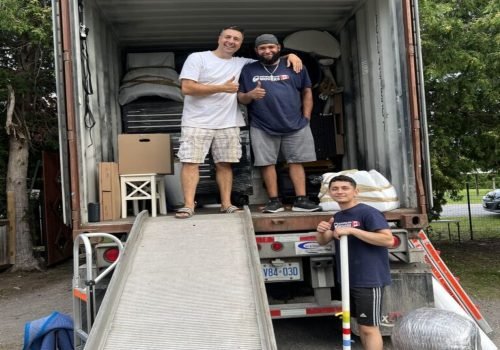
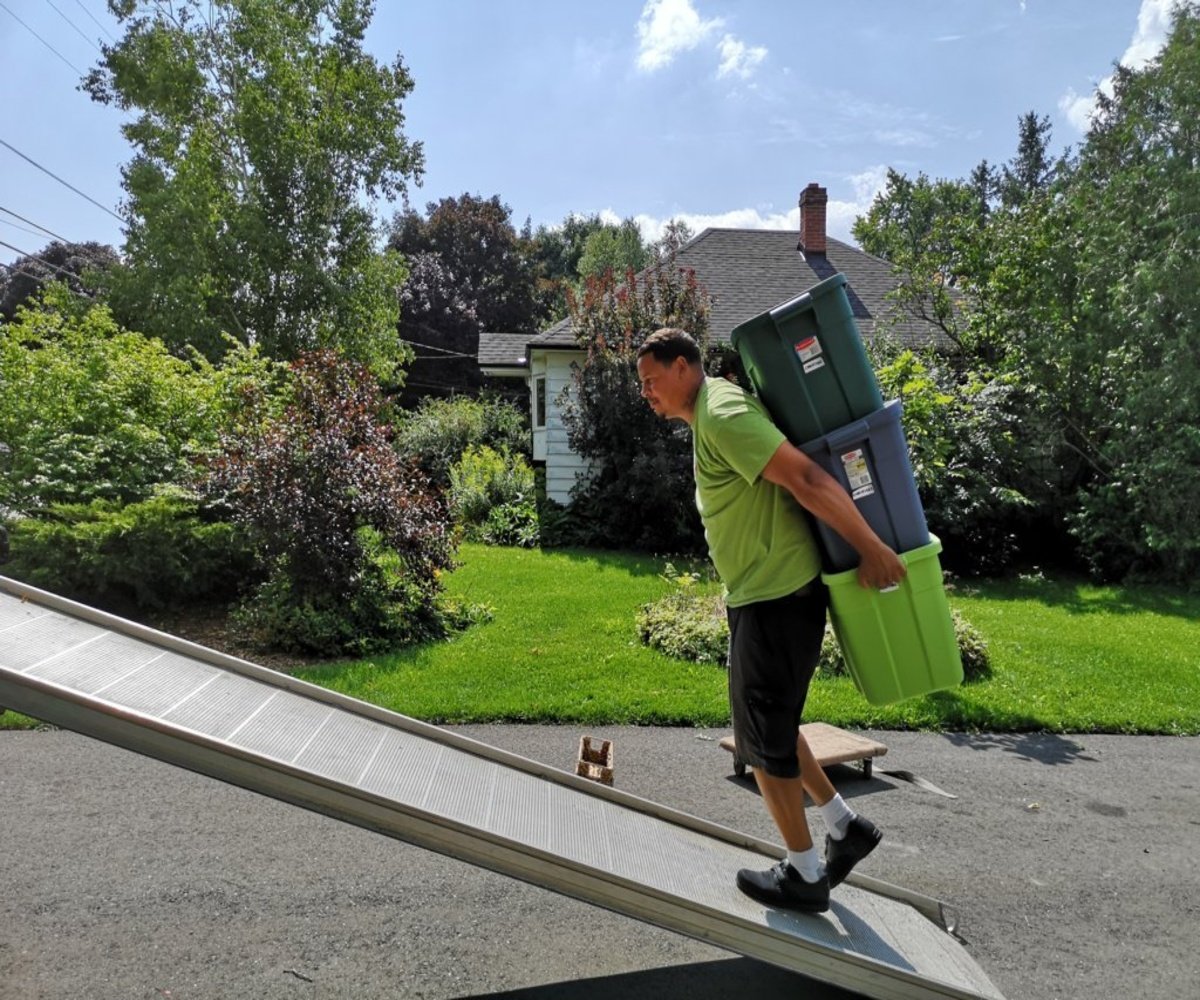
This is the most common use case. You drive the rental truck; the crew handles the heavy lift at both ends. The professional advantage is speed and structural integrity. A trained 3-person crew can load a 26-foot truck in 2-3 hours—a task that might take an untrained group 8+ hours with significant risk. Professionals use the “wall-building” method: creating a solid, interlocked wall of furniture from floor to ceiling, secured with ratchet straps. This prevents catastrophic shifting during Toronto’s stop-and-go traffic, protecting your belongings and your rental truck deposit.

Optimized Loading for Portable Storage Containers (PODS, Cubeit)

Containers present a unique puzzle: you must maximize every cubic inch to avoid ordering a second, costly unit. Amateur loading leaves vast, unusable gaps. A professional crew treats the container like a 3D game of Tetris. They place the heaviest, bulkiest items (appliances, dressers) at the back and along the walls first, creating a stable base. Then they systematically fill the space toward the door with boxes and lighter furniture, often disassembling items to create flat, stackable profiles. This precision-packing is what a true small moving service for labor excels at, ensuring you get full value from your container rental.

Intra-Building Relocations: Moving Within the Same Toronto Condo or Office

Moving from unit 1201 to 2801 in the same downtown Toronto tower is a truck-free operation. The challenge is purely vertical and horizontal carrying, requiring elevator reservation and corridor protection. A manpower crew is perfect for this. They handle the furniture transport using service elevators and hallway carts, often completing the move in a fraction of the time it would take you, while adhering to all building bylaws—something they do routinely for our local moving service clients across the city.

On-Site Furniture Rearranging and Residential Staging

You’re not moving out, you’re moving things around. Whether you’re installing new flooring, painting, or simply craving a new layout, hiring a labor crew for 1-2 hours is efficient and safe. They use furniture sliders, lift straps, and correct lifting biomechanics to reposition your heaviest items without scratching your hardwood floors or straining their backs. It’s a focused, affordable solution for refreshing your space.

Utilizing a Pick Up Moving Service for Specialized Deliveries

Sometimes, the need is for a single, critical transaction. A pick up moving service refers to a small, agile crew deployed for a defined pickup-and-delivery or handling task, often on a flat-rate basis. It’s labor-only, applied with surgical precision.

Curbside Pickup and In-Home Placement for Major Retailers

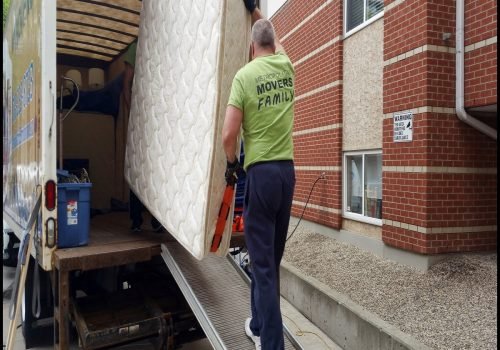
You bought a new mattress, treadmill, or sectional sofa from a big-box store. The retailer offers “curbside delivery” or charges a steep premium for in-home placement and setup. Instead of struggling, you hire a labor crew for a one-hour window. They meet the delivery truck at your curb, transfer the item, bring it into your home, navigate it to the exact room, unpack it, and remove the packaging. You pay a fraction of the retailer’s premium and get expert handling that avoids damage to your doorways and walls.

Online Marketplace Logistics: Handling Kijiji and Facebook Marketplace Pickups

You found the perfect vintage armoire in the Beaches, but the seller can’t deliver. Hiring a pick up moving service turns this logistical headache into a simple transaction. You provide the address and details, and the crew handles the pickup, secure transport in their vehicle or your rented one, and delivery into your home. This service is invaluable for safe, reliable handling of second-hand furniture where the seller offers no assistance.

Last-Mile Delivery for Bulky Furniture and Large Appliances

This bridges the gap between a freight carrier’s terminal and your doorstep. If you’ve ordered a large item that arrives at a depot, a labor crew can perform the “last-mile” service: picking it up from the terminal, transporting it, and delivering it into your home. This solves the common problem of “white-glove” delivery being unavailable or prohibitively expensive for certain items.

Temporary Furniture Removal for Renovations or Flooring Upgrades

Your floors are being refinished or your kitchen is being gutted. You need all furniture removed from the work area, often into a garage, basement, or a single protected room, and then returned once work is complete. A labor crew can execute this “furniture dance” efficiently, protecting items with moving blankets and placing them in a secure, organized stack. This clears the workspace for contractors and keeps your belongings safe.

Professional Furniture Disassembly and Reassembly Services

Many labor-only jobs require breaking down furniture to fit through doors or into trucks efficiently. Professional disassembly/reassembly is a skilled, systematic process, not a haphazard unscrewing.

Managing Complex Modular Furniture and IKEA Systems

Flat-pack and modular furniture is engineered for static assembly, not dynamic moving. Its particle-board joints and cam locks are weak against twisting forces. Professionals assess whether to reinforce stress points with corner braces or to partially disassemble the item into its major panels for flat, stable transport. This prevents the catastrophic “blow-out” that happens when a bookshelf twists during a stair carry. All hardware is meticulously organized in labeled bags taped to the corresponding panel.

Specialized Care for Antique Joinery and Luxury Office Setups

The golden rule with antiques and high-end office systems: disassemble only if originally designed to be. Century-old glued joinery (dovetails, mortise-and-tenon) can be permanently damaged if forced. For these items, protection is entirely external—using padded blankets, cardboard corner guards, and often custom-built A-frame braces to prevent flexing. For modern executive desks with integrated wiring, the process involves carefully disconnecting and labeling all cables before any movement.

Tools and Techniques for Secure Furniture Breakdown

Beyond screwdrivers and hex keys, professionals use:

  • Rubber Mallets & Dead Blow Hammers: For gently tapping apart snug joints without marring finishes.
  • Strap Wrenches: To grip and turn round, delicate components like glass tabletop supports without scratching.
  • Magnetic Trays: To keep all screws and small parts from getting lost during the process.
  • Photographic Documentation: Taking quick phone photos at each stage of disassembly to serve as a perfect reassembly guide.

Technical Benefits of Hiring Professional Local Moving Services

The value of professional labor extends far beyond “they lift heavy things.” It’s found in risk mitigation, physics, and time—your most valuable commodities.

Injury Prevention: Professional Lifting Techniques vs. DIY Physical Risks

The most significant hidden cost of a DIY move is injury. Back strains, herniated discs, and crushed fingers are common. Professionals are trained in team lifting mechanics: using legs, not backs; communicating every move; using straps to distribute weight. They treat heavy objects as systems to be managed, not challenges to be overcome through brute force. This training is your primary insurance against a life-altering injury or a WSIB claim if a friend gets hurt on your property.

Structural Protection: Preventing Damage to Walls, Floors, and Door Jambs

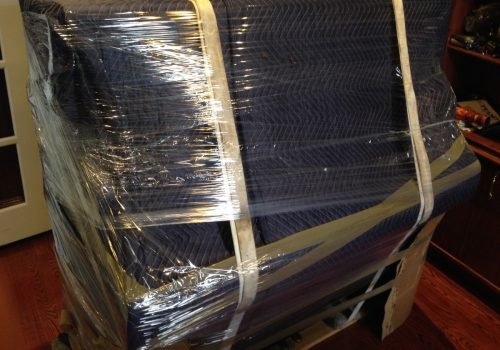
Your home is full of “attack surfaces”: door jambs, wall corners, stair railings, and flooring. Professionals come with a full armor kit: moving blankets, furniture pads, hard plastic corner guards, and canvas floor runners. They use techniques like “pivoting” and “blanket-wrapping” to ensure the furniture never directly contacts your property. A professional crew’s first 10 minutes on site are spent laying down this protection, a visible sign of their accountability.

Maximizing Space: Professional “Tetris” Loading to Reduce Rental Truck Size

An amateur-loaded truck often looks full but is only 60% efficient, risking a second trip (and double the cost). Professionals build a stable, dense wall of cargo. They place heavy, flat items (appliances, table tops) vertically against the wall to create a solid barrier. They fill voids with boxes and soft items. They disassemble what’s logical to create better geometry. This isn’t just stacking; it’s structural engineering in a moving truck. This skill alone can be the difference between needing a 15-foot truck and a 20-foot truck, saving you significant rental costs.

Efficiency: Completing Heavy Labor Tasks in a Fraction of the Time

Time is the unaccounted cost. What takes a group of friends an exhausting 8-hour Saturday, a professional crew of three can accomplish in a focused, uninterrupted 2.5-hour block. This efficiency isn’t about rushing; it’s about parallel processing, lack of breaks, and eliminating the trial-and-error that consumes DIY time. When you’re paying for a rental truck by the hour and mileage, or when you have a narrow 4-hour window for a condo elevator reservation, this speed is directly converted into cash savings and reduced stress.

Navigating Toronto-Specific Logistics and Cross-Border Challenges

Operating in Canada’s largest city adds unique layers that a professional crew is prepared for, and that you must be aware of as the coordinator.

Toronto Condo Protocols: Elevator Reservations and Security Deposits

Moving in Toronto almost always means dealing with a condo corporation. Their bylaws are strict and non-negotiable. You must book the building’s service elevator, often requiring 1-2 weeks’ notice, for a specific (and often expensive) time window. Bylaws typically mandate: proof of the mover’s liability insurance (usually $2-5 million), installation of floor and elevator protection by the movers (masonite and padded blankets), specific moving hours (e.g., 9 am – 5 pm on weekdays only), and a refundable damage deposit (often $500+). A professional company will ask for the property manager’s contact info to coordinate these requirements directly.

Parking and Curb Access: Navigating Green P, Permits, and Narrow Laneways

Illegal parking leads to tickets and towed trucks, which costs you money and time. Strategies include:

  • Parking Permits: For moves in residential areas, you can obtain a temporary “Moving Van” parking permit from the City of Toronto to reserve a spot directly in front of your building.
  • Green P Lots: In dense areas like Downtown or Midtown, renting a spot in a nearby municipal lot for the truck may be necessary.
  • Laneway & Alley Access: Many Toronto homes (e.g., in Riverdale, the Junction) have rear laneway access. Crews must assess if the laneway is clear, paved, and can accommodate a truck’s turning radius.

Failure to plan parking means the crew sits idle, on your clock.

Storage Facility Access: Logistics for Moving into Toronto-Based Self-Storage

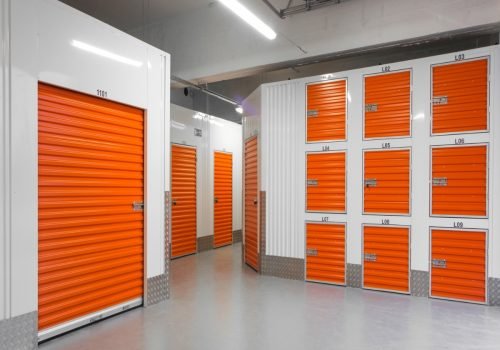
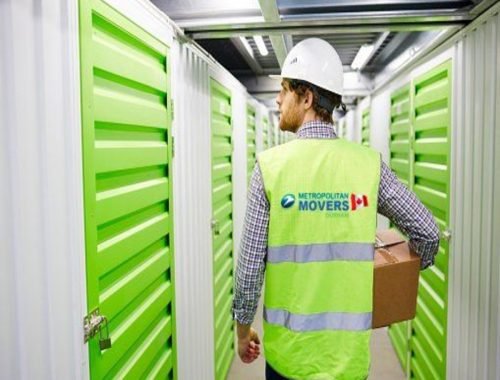
Loading a storage unit is a specialized skill, especially in Toronto’s multi-level facilities. Professionals don’t just pile things in; they create an accessible “library,” leaving a center aisle and placing frequently needed items near the front. They understand facility protocols: checking in, obtaining a cart, navigating to the unit (which may involve interior freight elevators), and rules about insurance and lock types. This turns a chaotic packing job into an organized system, a key part of integrated storage moving services.

Compliance with Ontario Workplace Safety and Insurance Board (WSIB) Standards

In Ontario, any business with employees must have WSIB coverage. For you, the client, this is critical. If a worker is injured on your property and the company does not have WSIB, you could be held personally liable for their medical costs and lost wages. Always verify the company’s WSIB coverage by asking for their clearance number or checking online via the WSIB’s Clearance Certificate system. This is a non-negotiable mark of a legitimate operation.

Weather Planning: Managing Toronto’s Seasons for Safe Labor Moves

Toronto weather is an active participant. Winter moves require proactive measures: crews will clear snow and ice from the truck ramp and pathways. Most critically, furniture must be fully wrapped in moving blankets before it leaves your home to prevent road salt spray from contacting wood or fabric, which causes immediate damage and corrosion. For summer humidity, breathable pads are used to prevent moisture trapping on wood. For rain, plastic tarps and extra floor runners are essential to keep interiors dry. A professional crew plans for these contingencies.

Liability, Insurance, and the “Loader vs. Driver” Conflict

This is the most complex and misunderstood aspect of labor-only moving. When responsibilities are split between you (the driver) and the crew (the loaders), the lines of liability blur. Understanding this framework is essential for your protection.

Understanding the Liability Gap in Labor-Only Moving Contracts

The primary risk is transit damage. If the crew loads the truck professionally, but you drive recklessly causing items to shift and break, who is liable? Conversely, if the crew loads improperly (failing to strap the load) and items shift during your normal driving, who is at fault? Most labor-only contracts will explicitly state that the moving company’s liability ends once the truck is loaded and the door is closed. They are responsible for damage caused by their negligent loading. You, as the driver and vehicle operator, are responsible for safe transit and any damage resulting from your driving or failure to secure the load after they leave.

Valuation Coverage: What Happens if Items are Damaged During Loading?

Reputable companies offer two levels of liability for damage they cause:

  • Basic Liability (Included): Often based on weight (e.g., $0.60 per pound per article). For a 50-pound table, that’s $30—virtually worthless.
  • Full Value Protection (Optional): For an additional fee (1-3% of the declared value), they assume liability for the repair or replacement cost of items damaged due to their negligence. For any valuable furniture, you must purchase this option and declare high-value items. Get the terms in writing.

Verifying Provincial Licensing and Cargo Insurance for Manpower Crews

Do not assume. You must verify two types of coverage:

  • Commercial General Liability (CGL) Insurance: Covers damage to your property (walls, floors, doors). Ask for a certificate of insurance.
  • Cargo Insurance (or “Goods in Transit” Insurance): This covers your belongings while under the mover’s care (i.e., during loading/unloading). This is separate from CGL and is what responds if they drop your antique dresser.

A professional company will provide proof of both without hesitation.

The Cost of Manpower-Only Local Moving Services

Transparency prevents bill shock. Manpower services in Toronto are typically billed by the hour, with clear minimums and defined fees. Understanding this model is crucial for budgeting.

Understanding Hourly Rates vs. Minimum Booking Requirements

Most companies have a minimum charge, usually 2-3 hours, even for small jobs. This covers their mobilization, setup, and basic tools. The hourly rate is for the entire crew (e.g., $140-$200/hour for a 3-person team), not per person. A travel/mobilization fee ($30-$80) is standard, covering fuel and time from their dispatch point to your first location. This fee is often waived for longer bookings.

Comparing Costs: Full-Service Moving vs. Labor-Only + Truck Rental

Let’s model a standard 2-bedroom apartment move within Toronto (4 hours of labor, 15-foot truck).

  • Full-Service Moving: $1,400 – $2,000 (includes truck, fuel, 3 movers, all materials, insurance, driving).
  • Labor-Only + Rental: Labor ($600 for 4 hrs) + Truck Rental ($120 + $40 fuel) + Materials ($50) = $810.

The labor-only hybrid saves approximately 40-50%. The trade-off is your time coordinating and driving.

Pricing for a Small Moving Service vs. Single-Item Labor

These differ in structure. A small moving service for a partial load is typically hourly with a minimum. A moving service for one item is almost always a flat fee. The flat fee for a single item (e.g., $250 to move a king mattress from A to B) includes all time, travel, and basic materials within that defined task. It provides cost certainty and is often more economical than paying a 3-hour minimum for a tiny job.

Common Surcharges: Stairs, Long-Carries, and Heavy-Lift Specialty Items

These are not hidden fees; they’re fair cost adjustments for increased labor intensity.

  • Stair Charges: Applied per flight beyond the first floor.
  • Long-Carry Fee: Triggered when the distance from the truck to the residence door exceeds a threshold (usually 50 feet). Common in Toronto with rear-laneway homes.
  • Heavy-Lift Premium: For items over 300 lbs (pianos, safes, commercial equipment), requiring extra personnel or a stair climber.

A professional estimator will identify these during the quote.

Payment Structure: Deposits, Balances, and Payment Methods

Clarity prevents conflict. The industry standard for reputable local moving services is a small booking deposit (10-25%) to secure your date, with the balance due upon job completion, before the crew leaves the destination. Payment is typically made on-site via cash, certified cheque, or major credit/debit card. Be highly wary of companies demanding large deposits (e.g., 50% or more) upfront or payment in cash-only before unloading begins. Always get a detailed, written invoice.

Essential Preparation for a Successful Labor-Only Move

Your preparation dictates the crew’s efficiency. A well-prepared client gets a faster, smoother, and cheaper move. You are the project manager.

Calculating the Correct Crew Size for Your Inventory Volume

Don’t guess. A 2-person crew is sufficient for an apartment of mostly boxed items and light furniture. For a house with large sofas, appliances, and a piano, you need 3-4 people. Under-crewing leads to overtime and exhaustion; over-crewing is inefficient. Describe your inventory honestly to the estimator. As a rule, a 3-person crew is the sweet spot for most Toronto apartment and townhouse moves.

Inventory Readiness: Having Items Boxed Before the Labor Crew Arrives

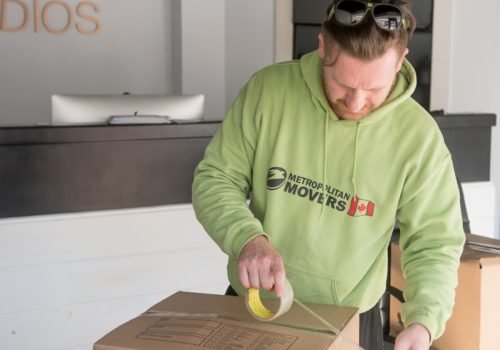
The golden rule: All small items must be in boxes, and all boxes must be sealed, labeled, and ready to go. The crew’s job is to move, not to pack. Time spent waiting for you to tape up a box or empty a drawer is billable time at professional rates. Create a logical staging area, ideally in a garage or near the front door, so the crew can start loading immediately. This is the single biggest factor in controlling your final cost.

Supplies You Must Provide: Moving Blankets, Tie-Down Straps, and Tape

Clarify this with your provider. Some labor-only services include basic tools (dollies, straps) but expect you to provide protective materials. Others bring a full kit for an additional fee. Never assume. Always ask: “What equipment do you bring, and what do I need to provide?” At a minimum, you should have on hand:

  • Moving blankets or furniture pads (rentable from U-Haul)
  • A roll of stretch wrap (for securing drawers and doors)
  • Ratchet tie-down straps (2-4 for securing the load in the truck)
  • Basic tool kit (screwdrivers, hex keys, adjustable wrench)

Integrated Disposal: Coordinating Junk Removal for Items That Won’t Fit

A common oversight: you’ve loaded the truck, and a few leftover items won’t fit. The manpower crew’s job is loading, not making disposal decisions. Plan for this in advance. Have a backup plan for donations (schedule a pickup with Diabetes Canada) or disposal (book a junk removal service for the same day). Don’t leave it as a last-minute scramble. Many companies offer furniture removal services that can be scheduled alongside your labor move.

Booking Timeline: Lead Times for Scheduled and Last-Minute Service

For a standard booking, aim for 1-2 weeks’ notice. For peak season (May-September) in Toronto, 3-4 weeks is safer. For a last-minute pick up moving service or same-day help, availability depends on crew slots. Many reputable companies offer expedited service if you call—it’s never guaranteed, but often possible. Always confirm the crew’s ETA the business day before your move.

Common Pitfalls in Labor-Only Moving and How to Avoid Them

Forewarned is forearmed. These mistakes turn a savvy solution into a stressful, expensive ordeal.

Underestimating the Time Needed for Complex Truck Loading

Clients often budget for 2 hours to load a truck, forgetting about travel time between locations, elevator waits, disassembly, and careful wrapping. A professional estimator will give you a realistic window. Add a 1-hour buffer to that estimate for unexpected delays. It’s better to budget for 4 hours and finish in 3 than to be rushed and risk improper loading.

Miscalculating the Necessary Size of a Rental Vehicle or Storage Pod

This is the most costly planning error. You hire a crew to load a 15-foot truck, but your belongings require 20 feet. Now you must extend the rental, pay the crew for extra time, and possibly even rent a second vehicle. Use online calculators from U-Haul/Penske, then add 15-20% for inefficiency. When in doubt, size up. The marginal cost of a larger truck is less than the cost of a second trip.

Ignoring Property Management Rules in Multi-Residential Buildings

Showing up on move day without having booked the elevator or submitted insurance certificates will halt your move before it starts. You will be charged for the crew’s time while you frantically call the property manager. Obtain and fulfill all building requirements at least 72 hours before your move. This is non-negotiable in Toronto’s condo landscape.

Selecting the Best Local Moving Services for Manpower in Toronto

Your vetting process must go deeper than a Google search and the lowest hourly rate. Toronto’s market has both exceptional professionals and risky operators.

Evaluating Local Reputation through Verified Reviews and Case Studies

Look for reviews that specifically mention “labor-only,” “loading help,” or “muscle movers.” Phrases like “efficient,” “careful with my walls,” “finished ahead of schedule,” and “brought great equipment” are positive signals. Check Google and Homestars for patterns of satisfaction over time. Avoid companies whose reviews are only for full-service moves, as labor-only requires a different operational mindset.

Identifying Professional Standards: Uniforms, Equipment, and Communication

Professionalism is visible and tangible. Do they arrive in branded uniforms? Do they bring their own, well-maintained equipment? Is their quote clear, detailed, and provided in writing? Do they ask probing questions about stairs, heavy items, and parking during the estimate? Do they confirm the details 24 hours in advance via phone or text? These are the signals of a crew that treats your job seriously. A company’s adherence to these standards is often reflected in their status as one of the leading service providers in the region.

Frequently Asked Questions (FAQs)

Will a small moving service bring their own dollies and tools?

The majority of professional services will bring core tools: appliance dollies, furniture dollies, moving straps, and basic tools for disassembly. However, protective materials like moving blankets, floor runners, and stretch wrap may be an extra charge or may need to be provided by you. This is the #1 question to ask when getting a quote: “Exactly what equipment is included, and what do I need to supply?”

Can I hire a pick up moving service for just one heavy item?

Absolutely. This is a common and efficient use of the service. Most companies will offer a flat-rate price for a single-item pickup and delivery, which includes travel time and a 1-2 hour minimum. It’s perfect for appliances, safes, or large retail purchases. Just be precise when describing the item, its weight, and the access involved (stairs, narrow doors) to get an accurate quote.

Are labor-only movers insured for damage to my personal belongings?

They should be, but you must verify. They need two key insurances: 1) Cargo Insurance for damage to your goods while under their care, and 2) Commercial General Liability (CGL) for damage to your property. The default cargo coverage is often minimal; always ask about purchasing “Full Value Protection” for valuable items. Never hire a crew that cannot provide proof of both insurances.

What is the average hourly rate for local moving services in Toronto?

For a professional 3-person labor crew, expect to pay between $140 and $200 per hour, with a 2-3 hour minimum. Rates vary based on the company’s reputation, insurance levels, and equipment quality. The cheapest rate often reflects lower insurance coverage, less experienced crews, or hidden fees. Consider the rate in the context of total value, not in isolation.

Do I need to empty my dresser drawers before the movers arrive?

Yes, absolutely. Leaving contents in a dresser makes it dangerously heavy, stresses its joints, and risks interior damage as items shift during lifting and transport. The sole, rare exception might be for very lightweight, soft clothing in a small dresser that will remain perfectly upright, but this should be explicitly discussed and approved by the crew lead on-site. When in doubt, empty it completely.

Need Professional Muscle for Your Toronto Move?

Stop risking injury, damage, and hidden fees. Get a transparent, all-in quote for professional labor-only moving in Toronto.

Metropolitan Moving’s Manpower Service provides:

  • Fully insured, WSIB-compliant 2, 3 & 4-person crews
  • All necessary tools, straps, and basic protection included
  • Clear, upfront hourly & flat-rate pricing
  • Expert knowledge of Toronto condo bylaws, parking, and access
  • Same-day & scheduled service for rentals, containers, and single items

You handle the truck. We handle the heavy lifting. Get your instant quote today.

Get Your Free Labor Quote
Call: (416) 555-0123

Leave a Reply

Your email address will not be published. Required fields are marked *